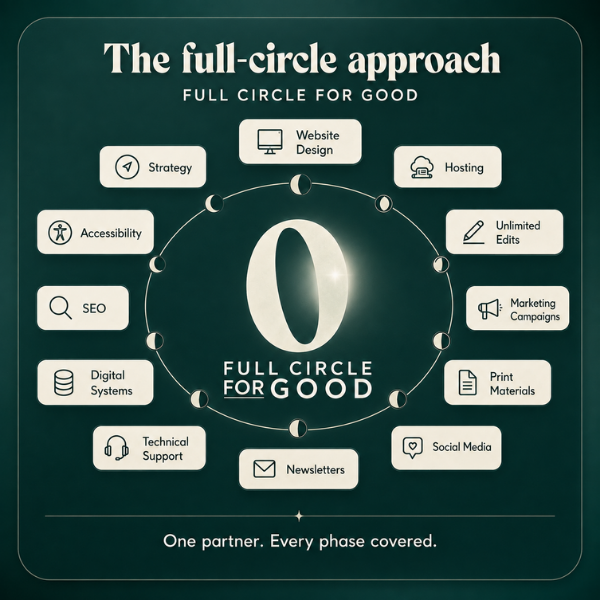
Few nonprofits have a full web team. Most have a few people who care about the website and a long list of other responsibilities. The question is rarely all in-house or all outsourced. It is which parts belong where.
What usually works well in-house
Your staff knows your programs, your community, and your voice better than anyone. They are usually best placed to:
- Update news, events, and program details
- Share stories and photos
- Respond to questions from visitors
- Keep content accurate and current
What often benefits from a partner
Some work needs specialist skills that are hard to hire or keep for a single organization.
- Security updates, backups, and monitoring
- Accessibility review and remediation
- Integrations with donor and email tools
- Search visibility and performance
- Larger changes, such as new sections or features
Questions to guide the decision
- How many hours a month can your team realistically give to the website?
- What happens if the person who manages it leaves?
- Which tasks feel risky when done without expert help?
- Does your funding allow for ongoing support, not just a launch?
A shared model
Many organizations choose a support level that matches their capacity. Staff manage what makes sense for them, and a partner stays available for everything else.
Manage what you want. Leave the rest to someone who knows your site.
The right balance changes over time, so review it each year as your team and goals change.
- website management
- staffing
- support